

GORONO
A legal firm's own system: CRM, proposals, contracts, invoices and acts, bank and accounting, client and lawyer portals, a bot and a site that brings leads.
The pain and the solution
The pain
- Clients, deals, documents and money sat in different programs and spreadsheets. Each one was paid for separately and data was copied between them by hand.
- A contract with an invoice took 30-40 minutes to type, and mistakes in the details surfaced after signing.
- Clients sent documents by messenger and email and phoned lawyers directly. When a case stalled, each side thought it was waiting for the other.
- Monthly profit and the tax due only became clear after reconciling with the bank.
How we solved it
- One system with one database: CRM, case management, documents, bank and accounting, portals, a bot and the website.
- Contract, invoice and act are assembled from the deal in a couple of minutes; company details come from the tax number.
- The client uploads into slots with hints, the lawyer replies through the bot, and the screen shows whose move it is.
- The bank is pulled in hourly, so profit and tax are on screen on any day of the month.
Recognise your task? We will solve it for you too.
Discuss a similar projectWhat we did
CRM and sales
A client is created from their tax number, a deal is built from the service list, a proposal goes out by a link with a personal code. Leads from the site and the bot become deals.
Contracts, invoices, acts
The contract is assembled from the deal, with the amount in words and the right grammatical cases. Invoices carry a payment QR code; the whole set goes out in one email.
Finance and accounting
The bank statement is pulled in every hour and payments find their deal. Plan and fact, tax, month closing, the simplified-tax return, payouts to lawyers.
Case management
Upload slots with precise hints, review by a lawyer, deadlines at every step, booking a filing slot and automatic checks of government registers.
Portals and bot
Separate portals for the client, the lawyer, the administrator and the accountant. Client and lawyer talk through the bot and never see each other's phone numbers.
Website and news
Over 50 pages built around search queries, a cost calculator, paid consultations with a fiscal receipt. Industry news is drafted by AI and checked by a lawyer.
The project in detail
GORONO helps schools, training centres, clinics and other organisations in Russia obtain an education licence, occupational safety accreditation, a medical licence, a fire safety (MChS) licence and a sanitary certificate. A single case runs for months, involves dozens of client documents, and every track has its own regulator and deadlines.
GORONO is part of the Logicore group of companies. We built its whole digital side: the gorono.pro website, CRM, case management, documents, finance and accounting, personal portals and a Telegram bot. It is one system with one database, used every day by the director, the lawyers, the accountant and the clients.
How it was
Clients sent scans by messenger, email and file-sharing links. Before a filing nobody was sure which version of the charter was the latest. A request for “documents on your specialist” brought back the wrong ones, and every round of clarification cost three days to a week.
Lawyers and clients phoned each other directly, and part of the conversation went past the company. When a case stalled, the client believed they were waiting for the lawyer and the lawyer believed the opposite.
Contracts and invoices were typed by hand. The bank statement was not linked to the deals, and answering “how much did we make in June” took the accountant half a day.
CRM: clients, deals and proposals
A client card is created from the tax number (INN). Name, registration numbers, address, lines of business and current licences are filled in automatically; only the director’s name is typed by hand. If the number is not found, the system highlights the fields to fill in and does not block the work.
A deal is built from a single service dictionary. The abbreviation, colour and name of a service are stored once and look the same in the deal, in finance, in the bot and in the client portal: rename a service in the dictionary and it changes everywhere. Leads from the site, from the bot and from paid consultations land in a deal with the right service.
A commercial proposal is generated from the deal and sent by a link with a personal access code, so only the client can open it.
Contracts, invoices and acts
The contract is assembled from the deal at the press of a button: number and date, client details, signatory and their authority, services with prices, payment stages, deadlines. The total is calculated from the selected services and cannot be typed in, so the figure in the contract header and in the annex always match. The amount in words and the Russian grammatical cases of names and cities are set by the system, which is exactly where templates usually break. If a deputy signs under a power of attorney, their details replace the director’s.
The finished contract goes to the client for approval and downloads as Word and PDF.
An invoice covers the whole contract or one stage and carries a payment QR code: the client points the banking app camera at it and the payment details fill in by themselves. Contract, invoices and acts go to the client in one email straight from the deal card.
Case management from application to the register
Each service is split into blocks set by the regulator; a fire safety licence for a company has 16 of them. Each block has upload slots with a precise hint, for example “Copy of the property register extract (not the company register)”. When the regulator wants a phrase in the charter word for word, the system shows it ready to copy.
The lawyer accepts a block, sends it back for rework or rejects it. A document cannot be returned without a comment, so the client always knows what to fix. The screen says whose move it is, and the manager sees deadline counters that turn red when a case is stuck with the client or with the lawyer.
Once the package is accepted, the client picks a filing time in the bot and everyone is reminded an hour before. After filing, the system checks the registers of the education and labour regulators every two hours on working days. As soon as the organisation appears in the register, the client, the lawyer and the administrator get a congratulation.
Finance, bank and accounting
The bank statement is pulled in every hour. A payment finds the client by the payer’s tax number and links itself to the deal when there is only one option. Ambiguous payments go to a “review manually” list instead of being guessed. The director gets a Telegram message about every incoming payment.
Every payment and every expense has two dates: planned and actual. Profit and simplified-regime tax are calculated from actual cash movement. When a month is closed, the system saves a snapshot of the figures and schedules the tax as a planned expense for the 28th of the following month. It fills in the simplified-tax return from bank receipts and turns a supplier’s PDF invoice into a payment order and an expense.
A lawyer’s fee is accrued automatically when they are assigned to a service. The lawyer confirms the accrual and marks the money as received. Every step can be rolled back and every step is logged.
Portals and the Telegram bot
There are four portals: client, lawyer, administrator and accountant. The client sees their services, documents and what is expected of them. A lawyer sees only their own clients and has no access to their phone numbers or emails. The accountant has the bank, contracts, invoices, acts and taxes; everything else is closed.
Client and lawyer talk through the bot. Phone numbers are cut out of messages, voice notes are transcribed, and the administrator sees the whole conversation and can reply. A visitor without a contract can check any organisation’s licence or accreditation by tax number in the bot, and for many people that is how they first meet the company.
Internal regulations and the training office
A separate product for clients is a package of internal regulations. The library holds 92 documents with 1,049 places where the organisation’s data is inserted. Before delivery the package is checked for gaps and for leftover names from the templates. Once a month the system checks the 11 laws the documents refer to and shows which clients have an outdated package.
The training office prints the paperwork for every stage of a study group: orders, applications, contracts, grade sheets, the exam protocol, the certificate register and the export for the federal register of education documents (FIS FRDO).
Website, search and AI-assisted news
gorono.pro is built around search queries. The semantic core has 360 queries, each important query has its own page, and the sitemap lists more than 50 pages. There is structured data for Yandex and Google, a cost calculator, a section on fees and deadlines, industry questionnaires and paid consultations with a fiscal receipt under Russian law (54-FZ). A payment finds the client by phone number, opens a deal and notifies the director.
Industry news is drafted by AI. A lawyer pastes a link to the source; the system downloads it and writes a headline, summary, questions and answers and the search description. The lawyer edits and publishes. News has its own sitemap and RSS feed, so search engines pick it up quickly.
What changed
A contract with an invoice takes a couple of minutes. Nobody visits regulators’ websites, the register is checked automatically. To see June’s profit, you open one screen. A client cannot be taken past the company, because the lawyer does not know their phone number. The code, data and domain belong to GORONO.
Who else this fits
Companies whose service lasts weeks or months, is built from the client’s documents and ends with a regulator’s decision: licensing and self-regulatory bodies, certification, tender and migration support, cadastral work, design and engineering, legal and accounting firms.
Materials about the project


Document workflow automation in a small company: what to move into the system first
Which documents to move into the system first, how your own document automation differs from buying an EDMS, and how to connect it to 1C and e-invoicing.


Business process automation: where to start, the stages and examples from our projects
What to automate first and what to leave alone, the stages from mapping to launch, and examples: legal paperwork, yarn accounting, a fulfilment warehouse.


CRM for a law firm: what it needs besides a client list
What a CRM for lawyers needs beyond clients and a pipeline: the case after the contract, documents per regulator rules, deadlines, access, staged payments.

How to automate contracts, invoices and acts without errors in company details
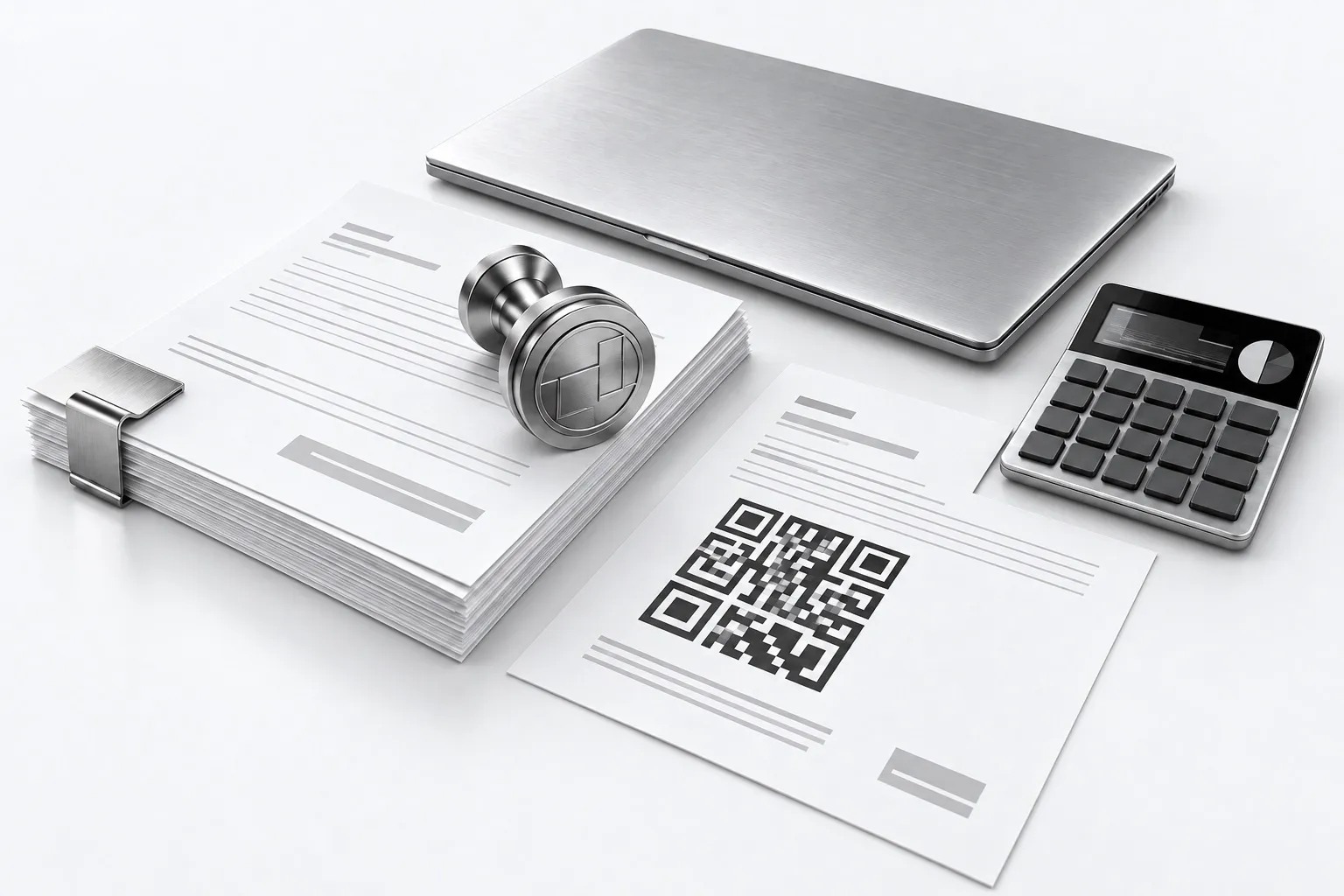
Where contract templates break, why the total should be calculated from services, how a QR-code invoice works and how to send the whole package in one email.
Discuss a similar project
Tell us about your task, and we will suggest how to build something like this for you.
- 01Analysis
We study processes, data and the points where value is lost, and fix the result we are working towards.
- 02Architecture and prototype
We design the system and build the first version on your real data. Stages and cost are agreed before work begins.
- 03Pilot
We launch in one area. Every stage is checked in a test version before it goes into operation.
- 04Scale and support
We connect the remaining areas, take responsibility for how the system runs and keep developing it.